
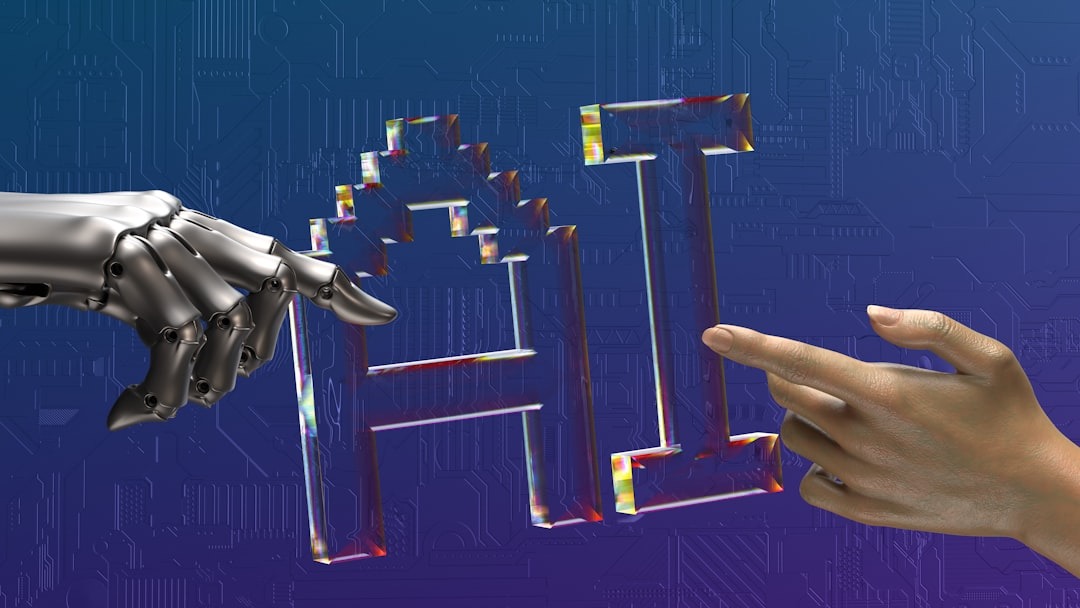
The Future of Work Is Not Automated. It’s Augmented
Every few months, a headline warns that AI leadership will replace managers, automate leadership, or eliminate the need for human judgment.
This narrative is not only wrong, it fundamentally misunderstands both technology and human behavior.
The future of work will not be shaped by AI alone.
It will be shaped by leaders who know how to use AI.
The organizations that thrive in the next decade will be those where technology handles complexity, and leaders handle humanity.
Not one or the other, both.
What AI Leadership Can Do and What It Should Never Do
AI excels at identifying patterns, analyzing massive data sets, predicting trends, and automating routine tasks.
In teleworking teams, this translates into:
- detecting early burnout indicators,
- analyzing communication patterns,
- highlighting workload imbalances,
- forecasting turnover risk,
- mapping collaboration networks,
- identifying training needs based on skill gaps.
But here is the mistake many companies are about to make:
Assuming that if AI can evaluate people, it should.
A model can process behavior.
Only a leader can understand it.
AI can tell you that engagement is dropping, but it cannot tell you that the real problem is a dysfunctional manager, a cultural disconnect, or a loss of meaning.
AI can tell you who talks most in meetings, but it cannot tell you who feels silenced.
Technology reveals the symptoms.
Leadership reveals the causes.

Decision Support, Not Decision Replacement
High-performing remote organizations use AI as a decision-support system, not a decision-maker.
The equation looks like this:
AI brings the data → The leader brings the interpretation → Together they create intelligent action.
In practice, this means:
- using predictive analytics to catch issues early,
- relying on AI to reduce administrative load,
- freeing leaders to focus on deep conversations, clarity, and empathy,
- ensuring decisions integrate both quantitative and qualitative insight.
Good leaders are not threatened by AI.
They become stronger through it.
Ethical Analytics: The Line Between Insight and Intrusion
AI does not create ethical problems, but humans do.
The question is not “Can we track this?” but “Should we track this?”
Ethical remote leadership requires boundaries:
- No surveillance disguised as analytics.
- No opaque data models.
- No evaluations made by algorithms alone.
- No decision-making without human accountability.
Employees must know what is being measured, why it’s collected, how it’s interpreted, and how it affects outcomes.
Trust is lost the moment data becomes a weapon rather than a tool. Ethical analytics is not a moral accessory.
It is a strategic requirement for long-term engagement.
Digital Emotional Intelligence: The Human Skill Technology Cannot Imitate
As AI becomes more sophisticated, emotional intelligence becomes more valuable, not less.
Remote leadership requires the ability to read subtle signals through text, tone, and silence.
Digital emotional intelligence includes:
- reading disengagement without physical cues,
- understanding when a short message hides stress,
- sensing cultural nuance in virtual communication,
- knowing when to escalate from chat to call,
- recognizing when people need clarity versus recognition.
AI can transcribe feelings.
Only a leader can interpret them. The leaders of the future will not be those who master tools, but those who master people through tools.

Human-Centered Technology as Competitive Advantage
At dr Taborosi Consulting & Advisory, we help organizations build systems where AI and leadership reinforce each other.
We integrate behavioral science, statistical diagnostics, and ethical digital design to ensure that technology enhances, never replaces, the human core of telework.
The future belongs to organizations that understand this truth:
AI handles the data.
Leaders handle the meaning.
Together, they create the future of work.
Remote teams do not need robotic leaders.
They need human leaders equipped with intelligent tools, leaders who use automation to amplify empathy, insight, and strategic clarity.
Leave a Reply